The building of Westminster Bridge was partly funded by a lottery, for which the prize was a truly giant silver wine cistern, or wine bottle cooler, made for Henry Jerningham. Flanked by nymph and satyr, supported by crouching panthers and decorated with scenes of Bacchus, it was made by master silversmith Charles Kandler in 1735, with modelling by Michael Rysbrack, weighing some 8000 ounces. The lottery tickets were five or six shillings each and were accompanied by a silver medal. The winner (who may not have realised its enormous size and weight) sold the original to a niece of Peter the Great and it is now in the Hermitage collection.
In 1884 Elkington's of Birmingham made electrotype copies of Russian silver treasures, including the Jerningham wine cistern, as part of an international art education project, and this copy is now in the Victoria and Albert Museum.

The Jerningham Wine Cooler, electroplate copy 1884
©V&A Museum
Another public lottery was run several decades earlier, for the building of Greenwich Hospital, which was begun following the wish of Queen Mary II to provide for old and wounded seamen after the naval battle of La Hogue. It was carefully controlled, according to John Evelyn (treasurer and a Commissioner for the Hospital) in 1699 for: "All Lotterys 'til now cheating people, to be no longer permitted than to Christmas next, except that for the benefit of Grinwich Hospital:"
Even John Locke, who was aways very cautious with his money, bought himself a ticket in summer 1700, when asked by a fellow scholar to buy tickets for some friends in Paris. There appear to have been monthly draws, with large and small lotteries at twenty shillings and five shillings a ticket. Because of the vagaries of the post, often sending letters via acquaintances crossing the Channel, some draws were missed, but Locke and his French friend did have some winning tickets, as what they jokingly called the ''deus ex machina" looked favourably on them.
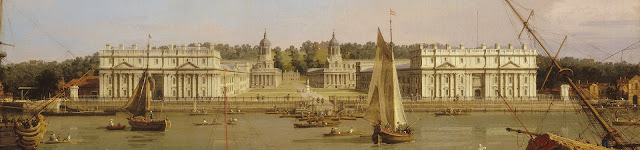
By August 1703 the sum of £89,364, fourteen shillings and eightpence-farthing had been spent on the buildings since work began in 1696. The first seamen were admitted in 1705 but building continued till 1752. The Old Royal Naval College is a wonderful sight from the Thames to this day.
Even John Locke, who was aways very cautious with his money, bought himself a ticket in summer 1700, when asked by a fellow scholar to buy tickets for some friends in Paris. There appear to have been monthly draws, with large and small lotteries at twenty shillings and five shillings a ticket. Because of the vagaries of the post, often sending letters via acquaintances crossing the Channel, some draws were missed, but Locke and his French friend did have some winning tickets, as what they jokingly called the ''deus ex machina" looked favourably on them.
By August 1703 the sum of £89,364, fourteen shillings and eightpence-farthing had been spent on the buildings since work began in 1696. The first seamen were admitted in 1705 but building continued till 1752. The Old Royal Naval College is a wonderful sight from the Thames to this day.

Greenwich Hospital, Antonio Canaletto c. 1752
© National Maritime Museum


